
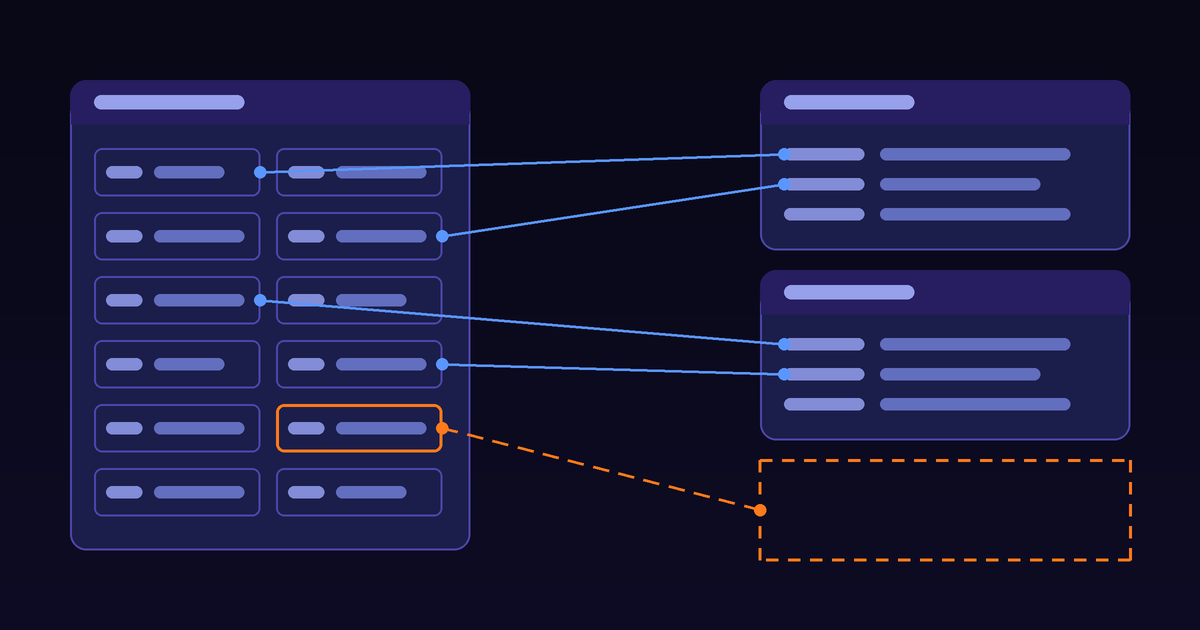
A Schedule K-1 looks like a one-page form. The face page has a header about the partnership and the partner, a capital account section, and a grid of numbered boxes with codes and amounts. For a simple investment, that page is the whole story. For most operating partnerships and S corporations it is not. Several of the boxes carry a code followed by an asterisk, and some carry no amount at all, only the letters STMT. The numbers those boxes stand for are on the pages stapled behind the form.
Those pages are the supplemental statement. They are not a courtesy attachment. They hold the values the form itself could not hold: amounts split by activity, informational items that are not a single dollar figure, and the detail a partner needs to report a coded item. A K-1 read only from its face page is a document with holes in it, and the holes are exactly where the partner most needs the number.
This piece describes how to read a K-1 so that every coded box is linked to the statement line that carries its value, where that link usually breaks, and what an extraction should hand to the person preparing the return. It does not describe how any item is taxed. That decision belongs to the preparer and the instructions, not to the extraction.
What the asterisk and STMT mean
The convention is written into the instructions, not invented by software vendors. The 2025 Partner’s Instructions for Schedule K-1 (Form 1065) say that in box 11, boxes 13 through 15 and boxes 17 through 20, the partnership identifies each item by a code in the column to the left of the amount. When it has attached a statement with additional information about an item, it enters an asterisk after the code. For informational items that cannot be reported as a single dollar amount, it enters an asterisk in the left column and STMT in the amount space.
The shareholder instructions for Schedule K-1 (Form 1120-S) describe the same two markers for S corporations. So there are two different situations on the face page, and they need different handling:
- Code, asterisk and an amount — the face page carries a total, and the statement explains or breaks it down. The statement lines should add back to the face amount.
- Asterisk and STMT, no amount — the face page carries nothing to check against. The statement is the only source of the value, and the extraction must say so rather than return an empty field.
Both are different from a box with a code and an amount and no asterisk, where the face page is complete. Reading the asterisk is therefore not decoration. It is the instruction that tells the reader where the value is.
Where the statements show up
Some items are routinely carried on a statement, because the instructions describe them as statement items. The list below is drawn from the 2025 partner’s instructions for the 1065 K-1; the 1120-S K-1 has parallel items under its own box numbers.
- Box 20, code Z, Section 199A information — the partner’s share of qualified business income items, W-2 wages, the unadjusted basis of qualified property and section 199A dividends, reported for each trade, business or aggregation. On the 1120-S K-1 the equivalent is box 17, code V.
- Box 22 and box 23 — when the partnership has more than one activity for at-risk or passive activity purposes, it checks the box and attaches a statement with the information for each activity.
- Box 16, Schedule K-3 — when the box is checked, items of international tax relevance are on an attached Schedule K-3. When it is not, the partnership attaches or has already issued a statement saying the partner will not receive a K-3 unless they ask for one.
- Box 13, codes A through G — charitable contributions, which the partnership reports on a statement by the adjusted gross income limitation that applies to each.
- Box 11, code A — other portfolio income, with a statement saying what kind of portfolio income is included.
None of this is unusual. A partnership with two rental properties, a service business and a few charitable gifts can easily produce a K-1 whose face page shows half a dozen asterisks and two STMT entries, followed by four to ten pages of statements. The statement pages are part of the document, and the face page is closer to an index of them.
Link each box to the line that carries its value
The statement does not always use the face page’s vocabulary. Preparer software lays it out in its own way. Some statements repeat the box and code in a heading (“Box 20, Code Z”). Some use only the item name (“Section 199A Information”). Some split a single box across several pages, one per activity, and a few put several boxes into one table. The extraction has to make the link explicitly, not assume that a number near the right words is the right number.
| Face-page box and code | Where the value is | Link to keep | Action when the link fails |
|---|---|---|---|
| Code with asterisk and an amount (for example box 13, code A*) | Face page total; breakdown on the statement | Face amount, each statement line, and whether the lines add up | Lines do not sum to the face amount: route to the preparer with both values |
| Asterisk with STMT (for example box 20, code Z*) | Statement only | Statement page, heading and each value, labelled as having no face total | No statement page found for the code: mark the item missing, not zero |
| Box 22 or box 23 checked | Per-activity statement | Each activity name or number with its own amounts | Box checked but only one activity on the statement: route for review |
| Box 16 checked | Attached Schedule K-3 | That a K-3 exists, its page range, and the partner it belongs to | Box checked and no K-3 pages in the packet: record as not received |
| Box 16 not checked | Notification statement, if attached | Whether the notice is present | Recorded as information; no K-3 is expected |
| Code with no asterisk | Face page | Face amount only | A statement line for this code anyway: keep it, flag the inconsistency |
Two details make the link reliable. The first is identity: every statement page has to be tied to the right K-1, by the partnership’s EIN and the partner’s identifier, because a single scanned packet often holds K-1s from several partnerships or for several partners. The second is provenance: every value carries the page and region it was read from, so that the person reviewing it can see the number on the statement, not just a field in a table.
Totals have to tie, and some cannot
Where the face page has an amount and the statement breaks it down, the check is arithmetic. The contributions on the box 13 statement, by limitation, should add to the box 13 amounts on the face page. The per-activity amounts on a passive activity statement should add to the boxes they divide. When they do not, the gap is shown with both numbers. It may be a rounding convention, a page the scan missed, or a statement from a prior draft of the K-1, and the extraction has no basis for choosing between them.
Where the face page says STMT, there is nothing to tie. The Section 199A detail is the clearest example: it is several kinds of value at once, reported for each trade, business or aggregation, and the face page cannot hold it. The honest output in that case is the statement’s values with a note that no face total exists. Inventing a total by summing unlike items, or leaving the field empty because the face page was empty, both lose information.
A third case is the absent statement. An asterisk with no matching statement page means part of the K-1 is not in hand. That is not a tax fact, and it should not become a zero. It is an item to request from the partnership or to look for elsewhere in the file.
A worked example
Take a K-1 from a fictional partnership, Harbor Lane Partners, issued to a partner who holds a stake in it. The packet is nine pages: the face page and eight statement pages.
- The face page shows box 2 with an amount, box 13 code A with an asterisk and an amount, box 20 code Z with an asterisk and STMT, and box 23 checked. Box 16 is not checked.
- Statement page 2 is headed “Box 13 — Charitable Contributions” and lists cash contributions under the 60% limitation. The total matches the face amount for code A.
- Statement pages 3 and 4 are titled “Section 199A Information” and give, for two activities, the qualified business income items, W-2 wages and unadjusted basis of qualified property. Neither page mentions box 20 by number.
- Statement pages 5 and 6 are the passive activity statement for box 23, listing two rental properties with separate income and expense figures. Their combined net agrees with box 2.
- Statement pages 7 to 9 belong to a different K-1, from another partnership, scanned into the same file.
The extraction links pages 3 and 4 to box 20, code Z by their title and by the fact that the face page marks code Z as STMT, and it labels those values as having no face total. It ties page 2 to box 13 and pages 5 and 6 to box 2 and box 23. It separates pages 7 to 9 by the EIN on them and attaches them to the K-1 they belong to. Nothing is routed for review, because every coded item has a statement and every total that can tie does tie. If page 4 had been missing, one activity’s Section 199A values would be recorded as not received, and the preparer would see it before relying on the K-1.
Patterns across a K-1 batch
During filing season a firm receives K-1s by the hundred, and the same failures recur.
- Statement pages separated from their K-1 — scanned out of order, or saved as a separate file by the client. Matching by EIN and partner identifier finds them again.
- One layout per preparer, not per form — a firm that sees K-1s from fifty partnerships sees perhaps a dozen statement layouts. Learning to read the heading and the table, rather than a fixed position, is what lets one reader handle all of them.
- Corrected K-1s — a later K-1 marked as amended may replace the statement as well as the face page. The newer statement belongs with the newer K-1, and the older one is kept as history, not merged into it.
- State schedules alongside the federal K-1 — many partnerships include state apportionment or composite filing schedules in the same packet. They are separate documents with their own purpose and have to be detected and routed as such, not read as part of the federal statement.
What the extraction should deliver
For each K-1 in a packet, the output a preparer can use without reopening the PDF:
- Identity — partnership name and EIN, partner name and identifier, tax year, form type (1065, 1120-S or 1041) and whether it is a final or amended K-1.
- Face page — every box, code and amount, with the asterisk and STMT markers kept as fields rather than discarded as punctuation.
- Statement lines — each value with the box and code it belongs to, the activity or trade it is reported for, and the page and region it was read from.
- Ties — for every coded amount with a statement: ties, differs (with both values), or no face total to tie to.
- Gaps — statement expected and not found, K-3 indicated and not in the packet, pages belonging to another K-1.
The accounting solutions page lists K-1 schedule parsing among what Cogneris handles: partnership, S corporation and trust K-1s parsed line by line, with state apportionment schedules detected and routed. That is the scope of this article, the K-1 and its statement read as one document, with the link between them made explicit.
Where this sits next to other tax articles
Two neighbouring pieces cover the K-1 from other angles. Tax return extraction for a self-employed borrower reads the K-1 from a lender’s side, as one of several schedules that describe a borrower’s income, and asks what each number says about capacity. 1099 and K-1 document availability treats the K-1 that has not arrived yet as its own fact, and models the calendar on which it is expected. This piece starts after the K-1 has arrived: it is about making sure every number the K-1 points to has been found.
Read the face page as an index
The face page of a K-1 tells the reader which items exist and where their values are. A code with an asterisk says that more detail is on the statement; STMT says that the statement is the only place the value is. Linking each of those boxes to its statement line, tying totals where a total exists, and naming the gaps where a page is missing turns a stack of pages into a K-1 a preparer can trust, without the extraction deciding how any of it is taxed.
Sources
- 2025 Partner’s Instructions for Schedule K-1 (Form 1065) — codes in box 11, boxes 13 to 15 and 17 to 20; the asterisk for items with an attached statement and STMT for items that cannot be reported as a single dollar amount; box 11 code A, box 13 codes A to G, box 16, box 20 code Z and boxes 22 and 23.
- 2025 Shareholder’s Instructions for Schedule K-1 (Form 1120-S) — the same attached-statement and STMT conventions for S corporations, and box 17 code V for Section 199A information.
This article explains document extraction and review handoffs. It is not tax advice and does not describe how any item on a Schedule K-1 should be reported.