
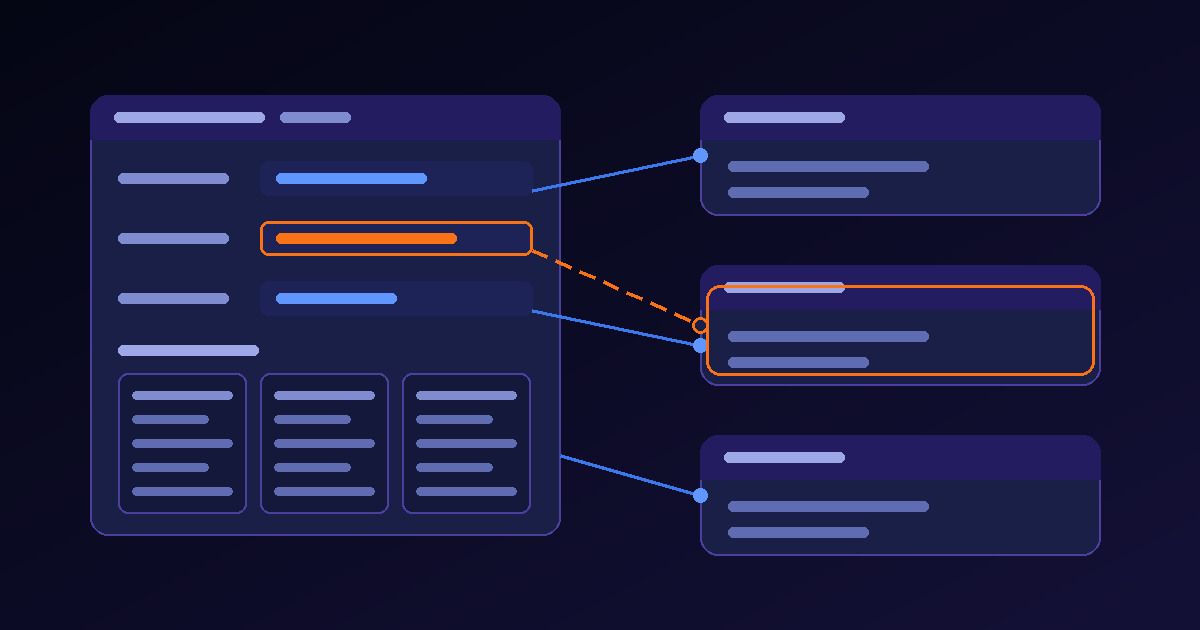
An appraisal report usually enters a loan file as one number. The appraised value is copied into the loan-to-value calculation, compared with the purchase price, and the rest of the report is filed as a PDF that nobody opens again unless something goes wrong. That habit treats the report as a verdict. It is closer to a measurement, and a measurement is only usable together with the conditions it was taken under: a date, a property, a contract and a set of comparable sales.
Each of those conditions is printed on the report, and each one has a counterpart elsewhere in the file. The effective date has to be read against the note date. The subject address and legal description have to match the purchase contract and the title commitment. The contract price on the appraisal has to be the price the borrower actually agreed to pay, including the concessions. The comparables have to exist, be recent enough and be close enough for the value to mean what the lender assumes it means. When any of those joins is wrong, the value can be perfectly correct and still be the wrong number for this loan.
This piece describes what an extraction has to capture from a residential appraisal so that those joins can be checked. It does not offer any opinion of value, and it does not second-guess the appraiser’s adjustments: that is the appraiser’s professional judgment, and the reviewer’s. The rules quoted come from public sources: the Fannie Mae Selling Guide sections on appraisal forms (B4-1.2-01, dated 09/03/2025), appraisal age (B4-1.2-04), the subject and contract sections (B4-1.3-02) and comparable sales (B4-1.3-08), all dated 06/04/2025, and two federal rules, Regulation B at 12 CFR 1002.14 and Regulation Z at 12 CFR 1026.35(c). Other investors and programs set their own limits; the structure of the problem is the same.
An appraised value is a value on a date
The appraisal report carries several dates, and they do different jobs. The effective date is the date the value applies to, usually the inspection date. The report date or signature date is when the appraiser finished and signed. The contract date is the date of the purchase agreement the appraiser reviewed. A loan file then adds dates the appraisal does not contain: when a copy was delivered to the applicant, and the date of the note and mortgage.
The age rule is measured from the effective date to the note date, not from the date the PDF arrived. Under B4-1.2-04, the property must have been appraised within the 12 months before the note and mortgage. When the effective date is more than four months but less than 12 months before the note, the appraiser must perform an update: an exterior inspection and a review of current market data, reported on the Appraisal Update and/or Completion Report, Form 1004D, and itself completed within the four months before the note. If the update says the value has declined, a new appraisal is required. Past 12 months, a new appraisal is required whether or not an update was done. A desktop appraisal has a shorter life: more than four months from the effective date to the note, and a new appraisal is required.
Three consequences matter for extraction:
- The effective date must be extracted as its own field — reading the signature date instead can move an appraisal across the four-month line in either direction.
- The 1004D is a separate document with its own effective date — it extends the life of the original report only if it exists, is dated inside the window and says the value has not declined.
- The note date is not known when the appraisal arrives — the age check has to be re-run when closing is scheduled, and again if closing slips.
The last point is the one that catches files. An appraisal that was comfortably inside four months at underwriting can be outside it by the time a delayed closing is rescheduled. Extraction that kept the effective date as data makes that a recalculation. Extraction that kept only the value makes it a re-read of the PDF, by someone who has to know to do it.
The report has to describe the property being financed
The Subject section identifies the property by complete address and legal description, and names the property rights appraised. B4-1.3-02 requires the address in a USPS-conforming format, populated consistently throughout the form, and allows a lengthy legal description to be attached as an addendum. The same section asks whether the subject has been offered for sale in the 12 months before the effective date and, when it has, requires each offering price, date and data source.
None of this is exotic, and all of it fails in ordinary ways. A unit number is missing on a condo. The legal description on the appraisal names a lot that the title commitment shows as two parcels. The property rights appraised are fee simple while the title shows a leasehold. The prior-listing answer is “No” on a property the purchase contract describes as recently relisted. Each of these is a disagreement between two documents that are both in the file, and none of them requires an opinion about value to detect.
The form type belongs to the same question. B4-1.2-01 assigns different forms to different properties and inspection scopes: Form 1004 for a traditional appraisal of a one-unit property with an interior and exterior inspection, Form 1004 Desktop and Form 1004 Hybrid when the appraiser did not inspect, or relied on data collected by someone else, Form 1073 for condo units, Form 1025 for two- to four-unit properties, and Form 1007 for the rent schedule when a one-unit investment property uses rental income to qualify. The form on file has to fit the property type on the application and the scope the loan program allows. Extraction should record which form it read, not just the fields it found.
The contract section is the appraisal reading the deal
For a purchase, the appraisal is not only a statement about the house. It is also the appraiser’s reading of the sale. B4-1.3-02 requires the lender to give the appraiser a copy of the complete, ratified contract, and requires the appraiser to state whether the contract was analyzed and, if it was not, why. For a purchase assignment, the appraiser must enter the contract price and the contract date, indicate whether the seller is the owner of record, and report financial assistance paid by any party on the borrower’s behalf: loan charges, sales concessions, gifts or down payment assistance, with the total dollar amount and a description of the items. The guide is explicit that this includes non-monetary items such as below-market financing, gifts of personal property and payment of property taxes or HOA dues for a period of time.
The same section adds a rule that is purely internal to the report: the contract price must be the same as the sales price of the subject in the Sales Comparison Approach grid. That is a check an extraction can run without any outside document at all.
The outside documents are where the drift happens. Purchase contracts are amended. The price is renegotiated after an inspection, the seller agrees to a credit toward closing costs, a personal-property item is added or removed. If the amendment came after the appraiser received the contract, the appraisal is reporting a deal that no longer exists. The owner-of-record answer depends on the title commitment, which may arrive after the appraisal. The concessions reported on the appraisal have to agree with the seller credits that eventually appear on the Closing Disclosure, and the two documents are prepared by different people weeks apart.
Field by field: what each value is confronted with
The table below lists the appraisal fields that are most often compared with something else in the file, the document they are compared with, and what a disagreement usually means. It is a starting set, not a checklist for any particular investor.
| Appraisal field | Confronted with | What a mismatch usually means | Action |
|---|---|---|---|
| Effective date of value | Note date (scheduled closing) | Report older than four months needs a 1004D; older than 12 months needs a new appraisal | Recompute when closing is scheduled or moves |
| Subject address, unit, legal description | Purchase contract, title commitment, loan application | Wrong unit, wrong or partial parcel, address variant | Route to the appraiser for correction; do not normalize silently |
| Property rights appraised | Title commitment | Fee simple appraised on a leasehold, or the reverse | Review against program eligibility |
| Contract price and contract date | Latest executed contract and amendments | Appraisal reflects a superseded version of the deal | Send the current contract to the appraiser |
| Seller is owner of record | Title commitment vesting | Assignment, recent flip or estate sale not disclosed | Review; may trigger a second appraisal (see below) |
| Financial assistance and concessions | Contract, then Closing Disclosure seller credits | Credits added after the appraisal, or reported differently | Review against concession limits |
| Subject sales price in the comparison grid | Contract price on the same report | Internal inconsistency in the report | Return to the appraiser |
| Report form | Property type and occupancy on the application | Condo on a one-unit form, two units on Form 1004, desktop where an inspection was required | Review scope against program |
| “Subject to” completion or repairs | Form 1004D completion certificate | Conditions not shown as satisfied | Hold until the completion report is in the file |
Every row has the same shape: a value printed on the appraisal, a value printed on another document, and a comparison that is either equal or not. The action column is deliberately modest. Most mismatches go back to a person, usually the appraiser, because the fix is a corrected report, not a corrected database field.
Comparables are evidence, and evidence has a provenance
The sales comparison grid is the part of the report that supports the value. B4-1.3-08 sets the floor: a minimum of three closed comparables must be reported in the sales comparison approach. Additional sales can be added; contract offerings and current listings can be used as supporting data; the subject’s own prior closed sale can be a fourth comparable. Comparables that closed within the last 12 months should be used, and an older sale is acceptable when the appraiser explains why. Proximity must be stated specifically, in miles with a direction, such as “1.75 miles NW”, measured in a straight line. Comparables from a competing neighborhood must be identified as such and explained. New condo projects, subdivisions and PUDs have stricter rules: at least one settled sale from inside the project and at least one from outside it.
Each of those rules can be checked against fields the grid already contains, without any judgment about whether the comparables were well chosen:
- Count — the number of comparables marked as closed sales, separate from listings and pending sales shown as support.
- Age — the sale date of each comparable against the effective date, with the appraiser’s commentary attached when a sale is older than 12 months.
- Proximity — the stated distance and direction, kept as written, so a reviewer can see which sales came from outside the neighborhood.
- Sale or financing type — REO and short sales, which B4-1.3-08 allows but requires the appraiser to address.
- Data source and verification — MLS, public records or, for builder sales in new projects, the settlement statement the appraiser says was used.
- Arithmetic — each adjusted sale price equal to the sale price plus the net of the line adjustments printed in that column.
The arithmetic check deserves a word of caution. It verifies that the grid adds up, not that the adjustments are right. Whether a garage is worth $8,000 in that market is the appraiser’s opinion and the reviewer’s question. Whether the column printed under it sums to the adjusted price is a property of the document, and a report where it does not is a report that needs a correction before anyone argues about the market.
More than one appraisal is a version problem
A loan file can hold several appraisal documents for the same property: a revised report after the lender asked for corrections, an update on Form 1004D, a second appraisal ordered under lender policy, and sometimes a second one required by regulation. Treating them as interchangeable picks whichever was attached last.
The guide gives the selection rule for the multiple-appraisal case. When a lender obtains more than one appraisal, B4-1.2-04 requires it to follow a policy of selecting the most reliable appraisal rather than the one with the highest value, to document why it relied on that appraisal, and to deliver the selected one. Extraction cannot make that choice, but it can make the choice visible: which reports exist, which appraiser signed each, which effective date each carries, which one was selected and where the reason is recorded.
Regulation Z adds a case where two appraisals are mandatory. Under 12 CFR 1026.35(c)(4), a higher-priced mortgage loan that finances the purchase of the consumer’s principal dwelling needs two written appraisals, by different certified or licensed appraisers, when the seller acquired the property 90 or fewer days before the consumer’s agreement and the price exceeds the seller’s acquisition price by more than 10 percent, or 91 to 180 days before with a price more than 20 percent higher. The rule has exemptions, and whether a loan is higher-priced is decided outside the appraisal. What the appraisal file does supply is the seller’s acquisition date and price, from the prior sale history the report discloses, and the owner-of-record answer. Those are the inputs the test needs, and they are much cheaper to extract than to discover at closing.
Revised reports raise a related timing question. Regulation B, at 12 CFR 1002.14(a)(1), requires a creditor to give the applicant a copy of every appraisal and other written valuation developed for a first-lien dwelling application, promptly upon completion or three business days before consummation, whichever is earlier. A waiver must itself be obtained at least three business days before consummation, unless it covers only a revised valuation with clerical changes from a version already delivered. So the file needs to know, for each version, whether it was delivered, when, and whether the change from the previous version was clerical. A corrected value is not a clerical change.
A worked example
Consider a purchase file where every individual document looks complete. The values below are invented for illustration.
| Field | Appraisal (Form 1004) | Other document | Result |
|---|---|---|---|
| Effective date | March 4 | Note date July 18 (closing moved from June 27) | 4 months and 14 days: update on Form 1004D now required |
| Contract price | $412,000 | Amendment dated March 20: $405,000 | Appraisal reflects the superseded price |
| Concessions | $0 reported | Same amendment: $6,000 seller credit | Credit not visible to the appraiser |
| Subject price in grid | $412,000 | Contract price on the same report: $412,000 | Internally consistent |
| Closed comparables | 3, sold 2 to 7 months before the effective date | Minimum of three; 12-month guideline | Meets the stated floor |
| Seller owner of record | Yes | Title commitment vesting: seller since 2019 | Consistent; no recent-acquisition question |
Nothing on the appraisal is wrong as written. The appraiser valued the deal they were shown, on the date they inspected. The file is still not ready: the appraisal does not reflect the amended price or the credit, and the rescheduled closing pushed it past the four-month line. Read as a single number, the appraised value would have gone straight into the loan-to-value calculation. Read as fields, the file produces two specific requests: send the amended contract to the appraiser, and order the update.
The example also shows why the checks belong after extraction rather than inside it. The extraction’s job is to return the contract price as the appraisal states it, with the page it came from. Deciding that the amendment supersedes it is a join across documents, and that join needs every document’s dates to be data.
What the extraction should deliver
For each appraisal document in a file, a useful extraction returns the report as structured fields with their source locations, not a summary:
- Identity of the report — form type, appraiser and license fields, assignment type, and whether this is an original, a revision or a 1004D update.
- Every date, separately — effective date, report or signature date, contract date and, for a 1004D, its own effective date and which report it updates.
- Subject and contract fields as printed — address, unit, legal description, property rights, contract price, owner-of-record answer, concessions amount and description.
- The comparison grid as a table — one row per comparable with address, proximity, sale date, sale price, sale type, data source, each line adjustment and the adjusted price.
- The reconciliation — the final opinion of value, the approaches developed and whether the value is “as is” or “subject to” completion, repairs or inspection.
- Page and field evidence — for every value, where on the report it was read, so a reviewer resolving a mismatch can see the original in one step.
The checks then run across documents: appraisal against contract and amendments, against title commitment, against the scheduled note date, and later against the Closing Disclosure. Each failed comparison becomes a reviewable exception that names both values and both sources. None of them becomes an automatic decision about value or eligibility.
Where this sits in a loan file
The appraisal is one document in a packet that also contains the application, income documents, bank statements, the purchase contract, the title commitment and the disclosures. Splitting that packet into its documents and classifying each one comes first; extracting the appraisal as fields is the step this piece describes. On income property, the rent roll and the appraisal meet on secondary income and market rent, a join covered in the rent roll piece. At closing, the appraisal’s concessions meet the Closing Disclosure’s seller credits, next to the reconciliation between the Closing Disclosure and the title commitment described in the closing reconciliation piece. The appraisal is the document that ties the property to a value at a point in time; the others tie the borrower, the deal and the title to the same loan.
Read the conditions, not just the value
An appraised value is the end of an argument that the report makes in fields: this property, these rights, this contract, these sales, on this date. A loan file that keeps only the conclusion cannot tell when the argument stopped applying, whether because the contract changed, the closing moved or a second report arrived. Extracting the dates, the contract fields, the comparables and the version history turns those events into comparisons a system can run and a reviewer can resolve. The value stays the appraiser’s. Checking that it still describes this loan is the file’s job.