
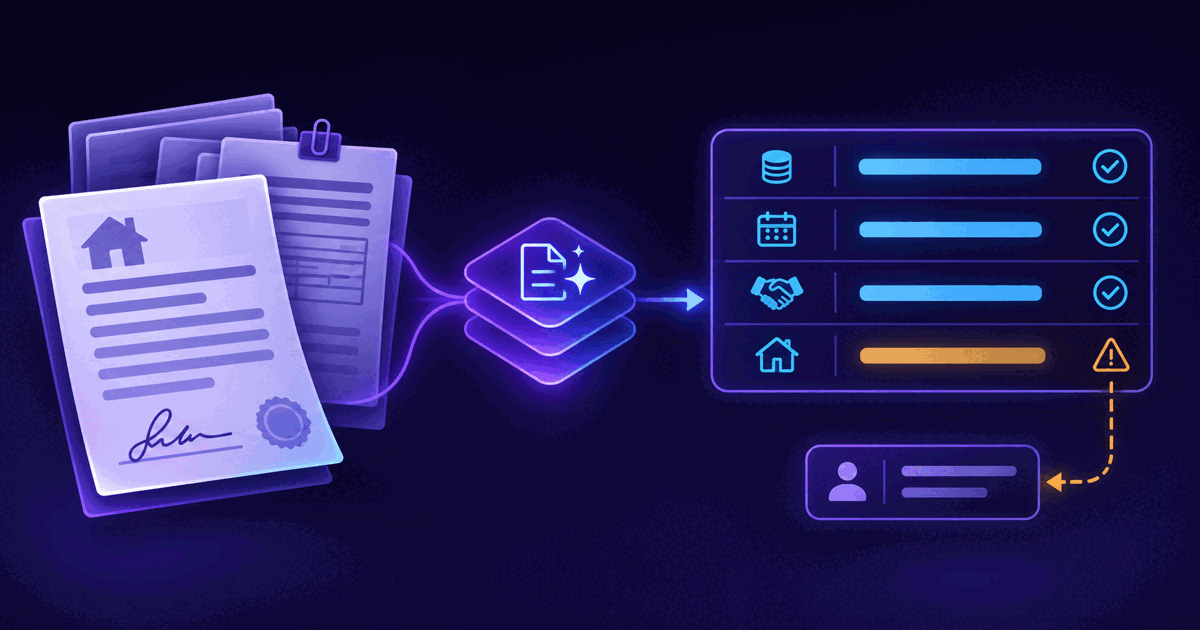
The delivery record is a second representation of a loan, not a summary of the folder. ULDD is based on the MISMO Version 3.0 reference model, and the data required can depend on loan type, loan features and business rules. The current reference documents matter: Fannie Mae published Phase 5 version 5.3.0 release notes on November 10, 2026; Freddie Mac published Appendix A version 6.3.0 on the same date. Their version numbers are separate, so a delivery workflow should identify which GSE requirements it is applying.
Start with the record that controls
A closing package is a collection of documents made by different parties at different times. A field extractor can find the same fact in more than one place: the loan purpose appears in the application and the final disclosure; the property address may appear on the Closing Disclosure, title commitment and appraisal. Similar wording does not make those documents interchangeable. Choose a source for each field, retain the document version and page, then compare corroborating records.
Four fields show how that mapping works. The exact field name and condition should be checked against the specification version in use.
| Delivery field | Primary source in the closing file | Cross-check | What to flag |
|---|---|---|---|
| LoanPurposeType | Final loan application (URLA / Form 1003) | Final Closing Disclosure and signed Note | Purchase versus refinance disagrees, or the selected source is an earlier application |
| NoteAmount | Executed Note | Final Closing Disclosure loan amount | Digits or decimal differ; a modification or construction-to-permanent case needs its specific rule |
| NoteDate | Executed Note | Closing package dates and any modification documents | The date was inferred from a funding date, signing date or stale draft instead of the controlling Note |
| AddressLineText | Property address on the final Closing Disclosure, under the lender's source policy | Title commitment and appraisal subject-property address | Unit, street suffix or parcel detail is missing or inconsistent; city, state and postal code are separate fields |
Freddie Mac's current Appendix A defines NoteAmount as the amount to be repaid as disclosed on the Note. It describes NoteDate as the date on the mortgage or Note and gives specific handling for some loan types. Its property-address data points separate street, city, state and postal code. That is why putting an entire address in one text field, or filling a missing unit from the nearest document, can hide a defect instead of resolving one.
A mismatch is a review item
Consider a fictional file with a signed Note for $318,000, a final Closing Disclosure showing a $318,000 loan, and an incoming delivery record with $31,800. The extracted Note value, the value on the disclosure and the delivery value belong side by side, each linked to its page. The system can identify the tenfold difference and route it for correction. It should not silently rewrite the delivery record or decide whether the loan can be sold.
The same rule applies to an address. Suppose the Closing Disclosure and title commitment both name Unit 6, while the appraisal and the delivery record omit it. That is a concrete mismatch with a source trail. It is not permission to guess whether the delivery field should include a unit, or whether a separate address field carries it. The lender's mapping rule answers that question; the extraction makes the evidence easy to inspect.
For every value, retain the original text, normalized value, source document identifier, page or region, extraction confidence, and any transformation applied. A reviewer should be able to move from a delivery exception to the exact evidence without searching the whole package again.
Keep versions and conditions attached
Closing documents can be corrected or replaced. A loan application may be updated, a Closing Disclosure may be corrected before consummation, and a Note may be replaced by modification documentation. The delivery process needs to identify which copy is final and why. Preserve issue or signature dates, version labels and links between originals and amendments. Do not treat a later upload as authoritative solely because it arrived last.
ULDD also distinguishes required, conditionally required and optional data. A field that is absent may be a missing value, a conditional field that does not apply, or a value expected under a later implementation date. Store those states separately. A blank string is not a reliable substitute for a documented conditionality, and a missing source should remain visible rather than being filled from a neighboring field.
The November 10, 2026 release illustrates why version control belongs in the workflow. The Fannie Mae 5.3.0 notes add contact-point data and revise implementation guidance; the Freddie Mac Appendix A 6.3.0 includes updated Phase 5 requirements. New and revised fields can change the delivery contract while the closing documents themselves look unchanged. Record the specification version with the mapping rules and rerun the relevant validation when that version changes.
Validate before the handoff
A useful delivery check is a short chain of explicit steps:
- Identify the final documents — distinguish signed and corrected copies from drafts and retain their dates.
- Map each data point — name its source document, page, normalization rule and conditionality.
- Compare the required pairs — put the extracted value beside corroborating values and preserve differences.
- Validate the delivery structure — check the active ULDD version, allowed values, required fields and loan-specific conditions.
- Route unresolved exceptions — show both values, their sources and the rule that needs a person to decide.
This is different from reconciling title fees or reading Schedule B exceptions. The Closing Disclosure and title commitment article covers those document-level financial and title comparisons. Here the question is whether selected closing facts were mapped correctly into a standards-based loan delivery record.
What a reliable delivery record carries
The output should include the structured field, its original source, normalized value, document version, validation result and exception status. A missing unit, a Note amount that differs from the delivery value, and a field that is not required for this loan are three different outcomes. Keeping them distinct lets a closing or delivery team correct the right issue without turning document extraction into an underwriting decision.
When the final file reaches the GSE, the seller is accountable for its contents. The practical safeguard is to make every value traceable to the closing evidence before the data leaves the lender's workflow: not merely extracted, but matched, versioned and reviewable.
Sources
- Fannie Mae, Uniform Loan Delivery Dataset — current specification and Phase 5 resources.
- Fannie Mae, ULDD Phase 5 (5.3.0) Specification Release Notes — November 10, 2026.
- Freddie Mac, Appendix A: XML Data Requirements, Version 6.3.0 — issued November 10, 2026.
The loan, people, amounts and address in the examples are fictional. This article describes document handling and data validation; it is not lending, legal or underwriting advice.